



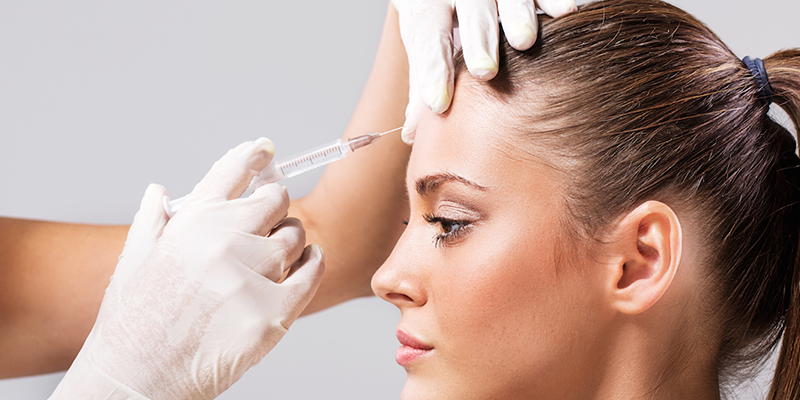
What is Botulinum Toxin (Botox) Application
Botulinum toxin application, commonly known as Botox, is one of the most frequently chosen minimally invasive cosmetic procedures worldwide. It is derived from the bacterium Clostridium Botulinum under laboratory conditions. There may be misconceptions among the public that it is derived from snake venom. It can be used not only for cosmetic purposes but also for many medical reasons.
Initially used for the treatment of eye problems such as blepharospasm and nystagmus, its aesthetic use was attempted when it was coincidentally noticed that wrinkles around the eyes decreased. Today, it is commonly used to reduce dynamic wrinkles, which are wrinkles formed when we move our muscles, in certain areas of the body (such as the face, scalp, and hands), reduce excessive sweating in specific body areas, and treat Masseter muscle (jaw) hypertrophy caused by teeth clenching.
Cosmetic Botulinum Toxin Application on the Face
Botulinum toxin application on the face is commonly used to reduce wrinkles in the forehead (frontal area), between the eyebrows (glabella), and around the eyes. The toxin applied to the muscles in this area eliminates dynamic lines, which are not visible in the normal resting position, within 4-10 days. The effectiveness usually lasts for 2-4 months and can extend up to 6 months in some individuals. The effect of the application does not disappear suddenly but gradually decreases over time. In individuals who start receiving toxin treatment at an older age, static wrinkles, which are wrinkles present in the resting position, do not disappear with botulinum toxin application. Therefore, individuals considering the procedure are recommended to start regular treatments from their 30s. Application of botulinum toxin with approved products, by expert physicians, and under sterile conditions has no harm. Although some individuals may request specific area applications, such as only the forehead, only the glabella, or only the eye area, this is not generally recommended. Since the frontal, procerus, and corrugator muscles are interconnected, reducing the function of a specific muscle in this area may cause other muscles to work excessively (hyperkinetic), leading to increased mimic wrinkles in certain facial areas.
Botulinum Toxin Application to the Masseter Muscle
In applications to this muscle, the function of the masseter muscle, one of the largest chewing muscles, decreases. While complaints such as teeth clenching and teeth grinding decrease in patients with these complaints initially, the results are more successful in repeated applications. Over the years, the masseter muscle undergoes hypertrophy with use and causes a square appearance in the jaw area. A single botulinum toxin application reduces muscle activity but does not immediately eliminate the square appearance. In repeated applications before the muscle function returns to its original state, the hypertrophied masseter muscle gradually shrinks, reducing the square jaw appearance, and complaints such as teeth clenching may decrease and disappear over time.
Botulinum Toxin Application for Sweating Complaints
Currently, there are not many options for sweating treatment. Among surgical and non-surgical treatment options, sweating botox is often preferred due to its practical application lasting about 15 minutes. Sweating botox blocks nerve stimuli causing excessive sweating in the sweating area. Before the treatment, the area to be treated is anesthetized with local anesthetic creams. Daily life can be resumed after sweating botox. The effect of sweating botox starts in 7-10 days and lasts for about 6 months. Sweating botox, with minimal risk, practical, easy to apply, and effective, is the most preferred method for excessive sweating treatment today.
Who cannot undergo botulinum toxin application?
– Pregnant women
– Breastfeeding mothers
– Those allergic to botulinum toxin
– Those with neuromuscular diseases such as Myasthenia gravis
– Those with inflammatory diseases or infections in the application area
– Those with body dysmorphic disorder
– Those with neurological diseases such as amyotrophic lateral sclerosis
– Those taking certain medications (such as aminoglycosides)
– Those with severe clotting disorders
Possible side effects
– Allergic reaction
– Blepharoptosis (drooping eyelids)
– Brow ptosis
– Development of antibodies against botulinum toxin (causing ineffectiveness)
– Small hematomas at injection sites