



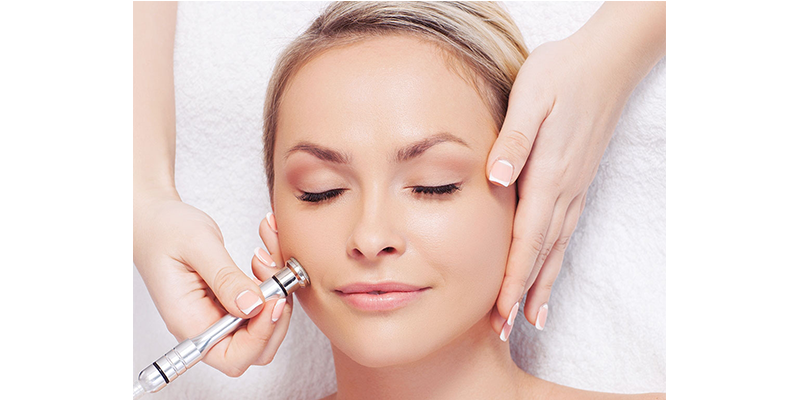
What is Gold Needle Radiofrequency?
Gold needle radiofrequency, commonly known as “gold needle” treatment among the public, is a fractional radiofrequency procedure. Gold needle is one of the most popular non-surgical aesthetic methods used worldwide. The gold needle application is an energy-based system, meaning it is done with a device without injecting any substance. The best aspect of non-surgical aesthetics is that individuals can continue their daily lives. Especially in patients who prefer non-injection methods or surgery, rejuvenation achieved by triggering the production of their own collagen and elastin is particularly preferred.
Morpheus 8 is an FDA-approved fractional radiofrequency device widely used worldwide. In this procedure, controlled radiofrequency energy is delivered to the skin subcutaneously with micro-needles, heating the skin and stimulating collagen synthesis. The device has different applicators used for various reasons and anatomical regions. Each applicator contains micro-needles that can penetrate different depths. These needles deliver energy to the deeper layers of the skin, triggering the production of new collagen and elastin.
It is used for skin renewal, tightening, pore reduction, reduction of fine lines, reduction of blemishes, acne treatment, correction of acne scars, reduction of surgical scars, reduction of stretch marks (striae), body tightening, reduction of cellulite appearance, reduction of neck wrinkles, and under-eye bags.
Where is Morpheus 8 applied?
– Face
– Neck and chin area
– Jawline
– Lower abdomen
– Arms
– Legs
– Hips
– Basically, almost any problematic area of the body
Why is it done?
– Acne and acne scar treatment
– Tightening of pores
– Treatment and prevention of fine lines
– Treatment of blemishes in combination with other products and procedures
– Abdominal sagging after weight loss
– Reduction of surgical and scar marks
– Treatment of leg and abdominal cellulite
– Treatment of stretch marks (striae)
Who is it not done for?
– Pregnant or lactating women
– Presence of a pacemaker
– Not recommended in case of open wounds or infections in the application areas
How often is it done? How many sessions are done?
Depending on the reason for treatment and the patient’s skin structure, a minimum of 3-4 sessions is done every 3-6 weeks. Treatment planning is done after consulting with a dermatologist.
Can it be done in summer?
Yes, it can be done in summer.
What should be considered after the procedure?
Most patients experience redness lasting for 1 day after the procedure. In some patients, this redness may last for 3-4 days, and very rarely, tiny scabs may occur within a week. Your dermatologist will arrange post-procedure care for you.